What Is Moringa? Guide to the Miracle Tree
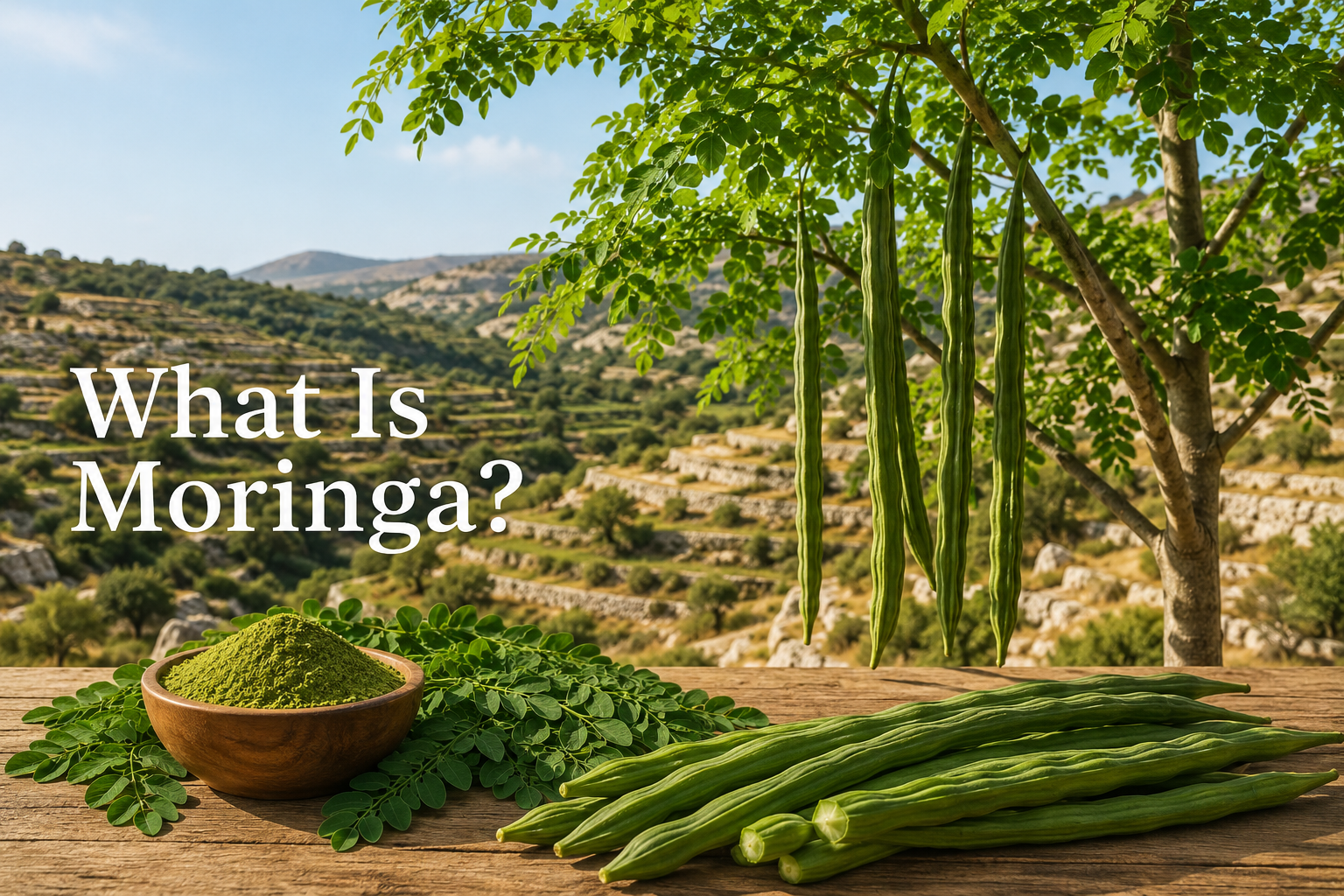 Moringa is a fast-growing, drought-tolerant tree best known through the species Moringa oleifera. Around the world it is called drumstick tree, horseradish tree, ben oil tree and, more popularly, the miracle tree. The nickname is understandable: its leaves are eaten as a green vegetable, its young pods are cooked in curries and stews, its seeds can be pressed for oil, its flowers are edible, and its seed cake has been studied for water clarification. Yet the word miracle can also mislead people if it is used carelessly. Moringa is not a cure-all, and it should not be marketed in Europe as a treatment for disease. Its real value is more grounded: it is a resilient food tree with unusually useful leaves, practical uses across many cultures, and growing relevance for warm Mediterranean places such as Cyprus.
A helpful way to understand moringa is to place it in three categories at once.
First, it is a botanical tree in the Moringaceae family.
Second, it is a traditional food plant with a long history in South Asia, Africa, the Middle East, the Caribbean and other warm regions.
Third, it is a modern ingredient in powders, teas, capsules, oils, functional foods and natural cosmetics.
These three identities overlap, but they should not be confused. Traditional use tells us how people have valued the tree. Nutrition data tells us what the plant contains. Scientific evidence tells us what has, and has not, been demonstrated under controlled conditions.
This guide is written for MoringaCyprus.com as the foundation article for the whole site. It explains what moringa is, why Moringa oleifera dominates the global market, how different parts of the tree are used, what the science actually says, what European buyers need to know, and why Cyprus could become a serious Mediterranean growing base for living moringa trees.
1. What Is Moringa?
Moringa is a genus of flowering plants in the family Moringaceae. The best-known species is Moringa oleifera Lam., a small to medium-sized tree native to the Indian subcontinent and now cultivated across tropical and subtropical regions. It grows quickly, responds well to pruning, and can produce edible leaves within a relatively short time under warm conditions. In many countries, it is treated as both a backyard food tree and a commercial crop.
The plant is often mistaken by beginners for a legume because of its compound leaves and long pod-like fruits. Botanically, however, the fruit is a capsule, and moringa is not a bean tree. The long green pods are commonly called drumsticks in India and are a familiar vegetable in South Asian cooking. The leaves are small, oval leaflets arranged along delicate stems. The flowers are usually cream or white and can appear early in the tree’s life in warm climates.
Moringa’s usefulness comes from its versatility. The leaves are the main nutritional product. Young pods are eaten as a vegetable. Mature seeds can be roasted, cooked or pressed for oil. Seed material has been studied for water clarification because of natural coagulant proteins. The oil, often called ben oil, is valued for its stability and cosmetic use. Flowers are used in some cuisines, and the tree can also provide animal fodder. Roots and bark have traditional uses, but they require caution because some compounds may be unsuitable for casual consumption.
In simple terms, moringa is best understood as a highly useful edible tree rather than a magic medicine. Its leaves can be a valuable part of a varied diet, especially in places where fresh green vegetables are limited. In Europe, where food choice is wide, moringa should be presented honestly: a nutrient-rich plant ingredient, a warm-climate tree, and a promising crop for growers, not a guaranteed medical solution.
2. Botanical Classification
Moringa oleifera belongs to the kingdom Plantae, order Brassicales, family Moringaceae, genus Moringa, species Moringa oleifera. The family Moringaceae is small compared with many major plant families, but it is distinctive. Members of the genus often show adaptations to dry or seasonally dry environments, including rapid growth, storage roots in some species, and tolerance of difficult conditions.
The accepted scientific name Moringa oleifera Lam. reflects its formal botanical description. The species name oleifera points to oil-bearing qualities, a reference to the seed oil that has long been valued. Common names vary by region. Drumstick tree refers to the long pods. Horseradish tree refers to the pungent root flavour. Ben oil tree refers to the seed oil historically used for food, cosmetics, perfumes and fine lubrication.
For MoringaCyprus.com, botanical accuracy matters because European readers may encounter many vague online claims. A proper authority article should identify the species clearly. Most powders, capsules, dried leaves, teas, seedlings and commercial trees sold as moringa are Moringa oleifera. Other species exist, but they do not have the same global food history, availability, regulatory familiarity or market recognition.
3. Origins and Historical Background
Moringa oleifera is generally described as native to the foothills and sub-Himalayan regions of northern India and nearby areas of South Asia. From there it spread widely through human cultivation into South-East Asia, Africa, the Middle East, the Caribbean, Central America and other warm regions. Its spread was helped by the fact that it grows quickly, tolerates dry periods, and can be propagated from seed or cuttings in suitable climates.
Historically, moringa has been valued in several ways. In India, the pods are an established vegetable and are widely used in dishes such as sambar. Leaves are eaten fresh or cooked in many regions. In parts of Africa, leaves have been promoted as a locally available nutrient source. In the Caribbean and Pacific, the tree is used for leaves, pods, animal feed and shade. Its seed oil was historically known as ben oil and was valued because it is relatively stable and slow to become rancid.
Traditional medicine systems have also used moringa. Ayurveda, Siddha and many folk traditions refer to parts of the tree for digestive, inflammatory, skin, lactation and general vitality uses. These traditions are culturally important, but they are not the same as modern proof of medical benefit. For a European website, the safe and responsible position is to respect traditional use while clearly separating it from authorised health claims.
4. Major Moringa Species
The genus Moringa includes several species, often described as thirteen recognised species. They include Moringa oleifera, Moringa stenopetala, Moringa peregrina, Moringa drouhardii, Moringa hildebrandtii, Moringa concanensis and others. These species differ in geography, tree form, drought adaptation, seed oil potential and traditional use.
Moringa oleifera is the global commercial leader. It is widely cultivated, fast-growing, productive, and supported by the broadest food history. Moringa stenopetala, sometimes called African moringa, is important in parts of Ethiopia and Kenya as a food tree, but it does not have the same European market position. Moringa peregrina is associated with arid regions of the Middle East and North Africa and has historic relevance for seed oil. Some other species are striking bottle trees adapted to dry landscapes, but they are mainly of botanical interest rather than mainstream food crops.
This distinction matters for buyers. When a European customer buys moringa powder, a living moringa tree, seed oil or a tea, they are normally expecting Moringa oleifera. If another species is used, the seller should identify it clearly and check its food status. Species substitution is not a minor detail; it affects safety review, consumer expectation and regulatory compliance.
5. Why Moringa oleifera Dominates
Moringa oleifera dominates because it combines speed, usefulness and familiarity. It can grow rapidly in warm conditions and can be coppiced or pruned to produce repeated leaf harvests. It has a long food history across multiple regions. Its leaves dry well into powder. Its young pods are well established as a vegetable. Its seeds produce oil. Its cultivation requirements are relatively simple compared with many high-value crops.
For commercial growers, the leaf is the most important product. Moringa leaves can be harvested fresh for local use or dried carefully for powder and tea. The dried powder has become the main European retail format because it is shelf-stable, compact and easy to add to smoothies, soups, sauces and functional-food recipes. For tree sellers, Moringa oleifera is also easier to explain to customers because it has recognisable common names and a large body of practical growing information.
For Cyprus, Moringa oleifera is the obvious starting species. It suits warm growing seasons and can be tested in sheltered Mediterranean microclimates. It also connects naturally to existing European demand for moringa leaf powder, fresh speciality greens, edible trees, wellness products and climate-resilient crops. Other species may be interesting to collectors or for research, but Moringa oleifera should be the foundation for a practical nursery and educational platform.
6. Uses of Leaves, Pods, Seeds, Flowers, Bark, Roots and Oil
Leaves are the most widely promoted part of the plant. They can be eaten fresh when young and tender, cooked like spinach, dried into flakes, or milled into powder. In household use, the powder is often added in small amounts to smoothies, soups, sauces, omelettes or savoury baking. Fresh leaves have a green, slightly earthy flavour. Dried powder is stronger and should be introduced gradually.
Young pods are another major food part. In South Asian cooking they are cut into sections and simmered in soups, curries and lentil dishes. The outer pod becomes fibrous as it matures, so pods are best harvested young for vegetable use. Inside, the soft seeds and flesh contribute flavour and texture.
Seeds have several uses depending on maturity. Young seeds can be cooked like peas in some traditions. Mature seeds can be roasted, boiled or pressed for oil. They are not usually the first product recommended to European beginners because flavour, preparation and tolerance vary. Seed extracts and concentrated seed products also require more caution than leaf foods.
Flowers are edible in some cuisines and can be cooked or used in teas, though they are less common in European retail. They also support pollinators when the tree flowers successfully. Bark, gum and roots have traditional uses, but they should not be casually promoted for modern European food use. Root bark especially needs caution, and root preparations should not be treated as beginner’s food. Ben oil, pressed from seeds, is valued in cosmetics and, when produced safely, in culinary contexts. It is known for a fatty acid profile rich in oleic acid and for good oxidative stability compared with many oils.
7. Nutritional Profile
Moringa leaves are the main reason the tree has gained global attention. Fresh leaves contain water, protein, fibre, minerals, carotenoids, vitamin C and a range of plant compounds. Dried leaf powder concentrates many nutrients because most of the water has been removed. This is why a spoon of powder can look nutritionally impressive on paper, but it should still be understood as a food ingredient rather than a substitute for a balanced diet.
Nutrition values vary widely according to soil, irrigation, climate, leaf age, harvest season, drying temperature and storage. Mature dark green leaves can differ from young pale leaves. Shade drying can preserve quality better than harsh drying. Poor storage can reduce colour, aroma and vitamin content. European customers should therefore look for suppliers who can explain harvest, drying and testing standards.
The most consistent nutritional message is that moringa leaves are a useful plant source of minerals, protein and antioxidant compounds. They can help diversify a diet and provide a concentrated green ingredient. However, exaggerated comparisons such as more calcium than milk or more iron than spinach can be misleading if they ignore serving size, fresh-versus-dried weight, bioavailability and normal eating patterns. A fair statement is that moringa leaf powder is nutrient-dense, but it works best as part of a varied diet that also includes vegetables, legumes, fruit, whole grains, nuts, seeds and appropriate protein sources.
8. Traditional Uses Around the World
Traditional moringa use is broad. In India and Sri Lanka, drumstick pods are a familiar vegetable. Leaves are cooked into curries, stir-fries and soups. In parts of West and East Africa, leaves are dried and added to meals, sometimes in nutrition programmes. In the Caribbean, moringa is grown around homes and used as a green vegetable, animal fodder and herbal tea. In the Philippines and other parts of Asia, leaves are used in soups and family cooking.
Traditional health uses include support for digestion, general strength, lactation, skin care, inflammation, blood sugar balance and infections. These uses should be recorded respectfully because they show how communities valued the plant. But a responsible European article must also say plainly that traditional use is not the same as approved medical evidence. Many claims are based on long experience, small studies, animal work or laboratory research rather than large human trials.
Traditional non-food uses are equally interesting. Seed powder has been used to clarify turbid water because it can help suspended particles clump and settle. Seed oil has been used in cosmetics, perfumes and lubrication. Leaves and young shoots can be used as animal fodder. The tree can be pruned into a hedge or managed as a small leaf-production tree. These practical uses help explain why moringa became known as a multipurpose tree.
9. Scientific Perspective: What Evidence Supports and What Remains Unproven
Modern research has examined moringa for nutrition, antioxidant activity, anti-inflammatory mechanisms, blood sugar markers, lipid markers, antimicrobial effects, liver protection, water clarification and animal feed. Much of this research is promising, but the quality and type of evidence vary. Laboratory and animal studies can help identify mechanisms, but they do not prove the same effect in humans. Small human studies may suggest possible benefits, but they often need replication with better design, larger sample sizes and clear product standardisation.
The strongest everyday case for moringa is nutritional. Leaves are a real food with useful nutrient density. They can contribute to dietary diversity and may be particularly valuable in regions where fresh vegetables and micronutrients are limited. This is different from saying that moringa cures disease. In Europe, where strict food and supplement rules apply, sellers should avoid disease-treatment language and should be careful with claims about diabetes, cancer, high blood pressure, arthritis, fertility, immunity or infections.
Research into antioxidant and anti-inflammatory compounds is scientifically interesting. Moringa contains phenolics, flavonoids, glucosinolates and isothiocyanate-related compounds. These may help explain some laboratory findings. But consumers should not be told that antioxidant content automatically means a guaranteed health outcome. The human body is complex, and food compounds interact with digestion, gut microbiota, dose, preparation and overall diet.
The fair conclusion is balanced: moringa is nutritionally valuable, scientifically interesting, and culturally important, but many health claims remain stronger in traditional or preliminary research than in high-quality human clinical evidence.
10. Practical Guidance for Beginners
A beginner in Europe should start with the leaf. It is the most familiar, widely used and practical moringa product. Choose either a living Moringa oleifera tree, fresh leaves from a trusted grower, dried loose leaf, or a tested powder from a reputable supplier. Look for clean colour, fresh aroma, batch information, country of origin and evidence of hygiene controls. Avoid powders that smell musty, look dull brown, or make unrealistic medical promises.
If using powder, start small. A quarter to half a teaspoon in food is a sensible introduction for many adults, increasing gradually if tolerated. Moringa has a strong green taste, and too much can overpower a meal. It blends well with banana smoothies, lentil soups, tomato sauces, omelettes, savoury pancakes and green dips. Heat may reduce some heat-sensitive nutrients, so many people add powder near the end of cooking rather than boiling it for long periods.
Anyone pregnant, breastfeeding, on medication, managing a medical condition, or using blood sugar or blood pressure medication should speak with a qualified health professional before using concentrated supplements. This is not because normal food use is automatically dangerous, but because concentrated powders, capsules and extracts can interact with individual circumstances. Children should be given food-level amounts only, not adult supplement doses.
For growers, moringa needs warmth, sun, drainage and protection from cold. It dislikes waterlogged soil and frost. In pots, it needs a free-draining mix and careful watering. In the ground, it should be planted only where winter conditions are suitable or where protection is available. Regular pruning encourages leaf production and keeps the tree manageable.
11. Cyprus Cultivation Perspective
Cyprus gives moringa an interesting opportunity because the island has long, hot summers, strong sunlight and many sheltered lowland and foothill areas. These conditions can suit Moringa oleifera during the warm season. The challenge is not summer growth; the challenge is winter survival, wind exposure, irrigation management and site selection.
In Cyprus, moringa should be approached as a warm-climate edible tree that needs protection during establishment. Young trees are more vulnerable than established trees. A sheltered south-facing position, good drainage, mulch, sensible watering and protection from cold wind can make a significant difference. Heavy wet soil is a bigger risk than dry soil. Overwatering can damage roots, especially in containers.
Kelokedara and similar Paphos district microclimates should be observed rather than treated as identical to coastal Paphos or inland Nicosia. Elevation, night temperatures, winter wind, soil depth and water availability all matter. A tree that grows strongly in a sheltered courtyard may struggle on an exposed hillside.
12. European Market Perspective
The European moringa market is mainly built around leaf powder, capsules, teas, oils and natural cosmetic ingredients. Buyers are often interested in plant-based nutrition, green powders, vegan protein support, wellness routines, natural skincare and climate-resilient crops. However, the market is also crowded with exaggerated claims. This creates an opportunity for a more trustworthy European authority site.
European customers increasingly want traceability. They want to know where a product was grown, how it was dried, whether it was tested, and whether the claims are legal. A Cyprus-grown moringa brand could stand out by being transparent: grown in Mediterranean conditions, harvested carefully, dried hygienically, labelled honestly, and supported by practical growing education.
13. European Regulatory Awareness
European food and supplement rules matter. In the EU and related European markets, ingredients may be affected by novel food rules, food supplement rules, contaminant limits, pesticide residue limits, labelling law and restrictions on health claims. The European Commission’s Novel Food Catalogue is a non-binding information tool, and food businesses remain responsible for checking the legal status of products they place on the market.
Moringa oleifera leaf products are widely present in the European market, but sellers still need to verify the status of the exact ingredient, plant part, preparation method and intended use. A leaf powder is not automatically the same as a seed extract, root product or concentrated isolate. Different species also matter. EFSA raised safety objections in 2019 regarding Moringa stenopetala leaf powder as a traditional food notification because the information supplied was insufficient to conclude on safety. That should not be confused with a blanket ban on Moringa oleifera leaf, but it does show why species identification and documentation are important.
Health claims are another major issue. In the EU and UK, businesses cannot freely claim that a food treats, prevents or cures disease. Even general wellness claims must be handled carefully. A compliant moringa article can discuss nutrients, traditional uses and emerging research, but product pages must avoid unlawful medical claims. Phrases such as supports a varied diet are safer than cures diabetes or treats inflammation.
Practical compliance steps include using the correct botanical name, identifying the plant part, keeping supplier specifications, checking contaminant and microbiological standards, avoiding disease claims, and reviewing Novel Food status before launching unusual products such as seed extracts, bark, root or concentrated preparations.
14. FAQ
What is moringa?
Moringa is a genus of flowering trees best known through Moringa oleifera, a fast-growing edible tree valued for its leaves, pods, seeds and oil.
Why is moringa called the miracle tree?
It is called the miracle tree because many parts of it have practical uses. The name is popular, but it should not be taken to mean that moringa cures diseases.
Is Moringa oleifera the main commercial species?
Yes. Moringa oleifera is the species most commonly used for leaf powder, teas, capsules, edible pods, seed oil and living trees.
Where does moringa come from?
Moringa oleifera is generally associated with northern India and nearby South Asian regions, and it is now grown across many tropical and subtropical countries.
Can moringa grow in Cyprus?
Moringa can grow in warm parts of Cyprus, especially in sheltered, sunny, well-drained sites. Winter cold, wind and waterlogged soil are the main risks.
Can moringa grow in Europe?
It can grow outdoors in some mild Mediterranean microclimates, but in colder European regions it usually needs greenhouse, conservatory or seasonal pot protection.
Which part of moringa is most useful?
The leaves are the most useful beginner product because they are widely eaten, easy to dry, and commonly sold as powder or tea.
Are moringa pods edible?
Yes. Young pods, often called drumsticks, are eaten as a vegetable in South Asian cooking. Older pods can become fibrous.
Are moringa seeds edible?
Seeds are used in some traditional foods and can be pressed for oil, but they should be prepared correctly and used more cautiously than leaves.
Is moringa powder safe?
Moringa leaf powder is commonly consumed, but quality, dose and individual health circumstances matter. Beginners should start small and avoid exaggerated supplement use.
Can moringa treat disease?
Moringa should not be promoted as a treatment or cure for disease. Research is ongoing, but many health claims are not proven to the standard required for medical claims.
What does moringa taste like?
Fresh leaves taste green and slightly earthy. Powder has a stronger grassy flavour and is best used in small amounts.
How do you use moringa powder?
It can be added to smoothies, soups, sauces, dips, omelettes and savoury recipes. Many people add it near the end of cooking.
Is moringa suitable for children?
Food-level use may be suitable in normal diets, but children should not be given adult supplement doses. Parents should be cautious with concentrated products.
Can pregnant women use moringa?
Pregnant or breastfeeding women should seek professional advice before using supplements or concentrated products, especially beyond normal food use.
Is moringa the same as matcha?
No. Matcha is powdered green tea from Camellia sinensis. Moringa is powdered leaf from Moringa oleifera and has a different nutrient profile and flavour.
Does moringa contain caffeine?
Moringa leaf does not naturally contain caffeine like tea or coffee.
What is ben oil?
Ben oil is oil pressed from moringa seeds. It is valued for stability and is used in cosmetics and some food contexts when produced appropriately.
Can moringa purify water?
Moringa seed material has been studied and traditionally used to clarify turbid water, but safe drinking water still requires proper treatment and microbiological safety.
What should European buyers check before buying moringa?
They should check the species, plant part, origin, batch quality, testing information, realistic claims and whether the seller follows food or supplement rules.